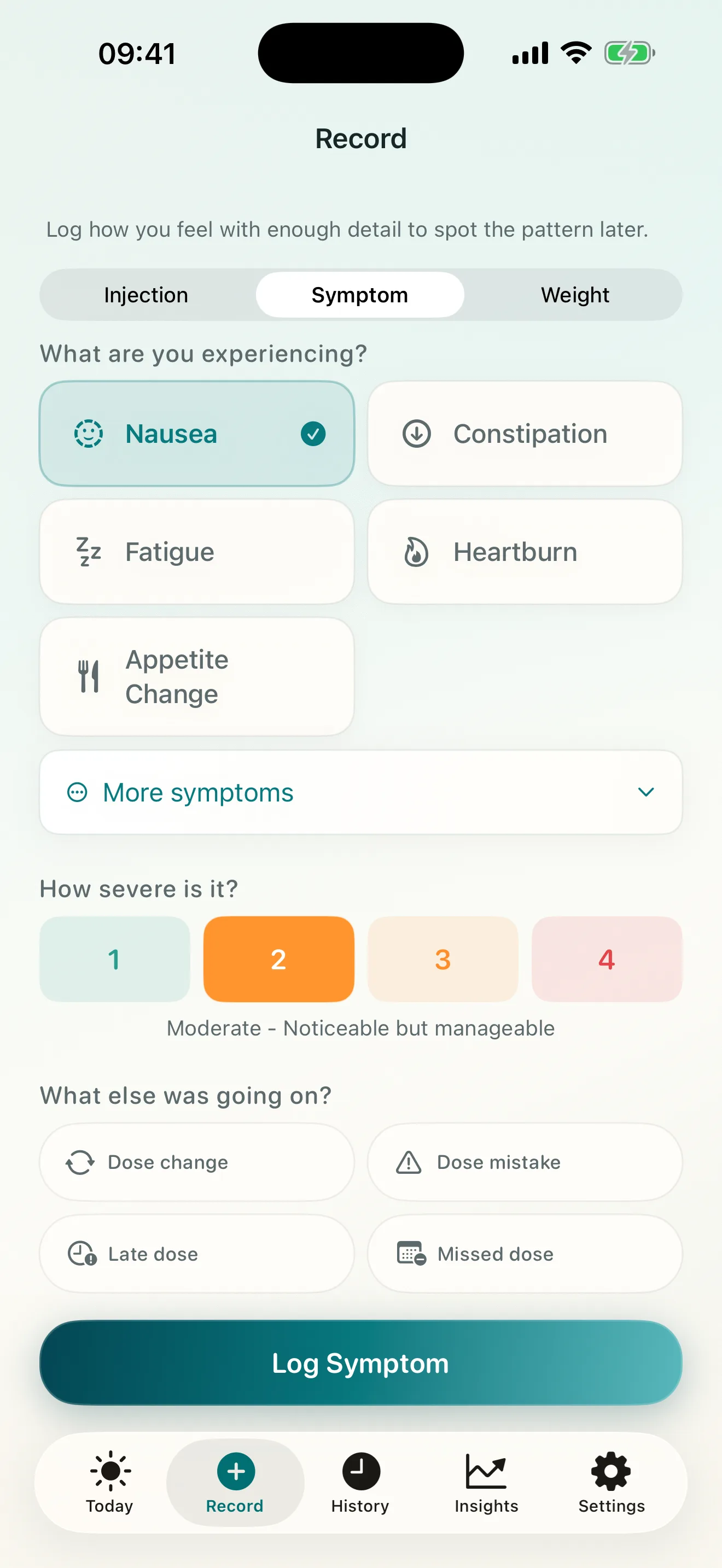
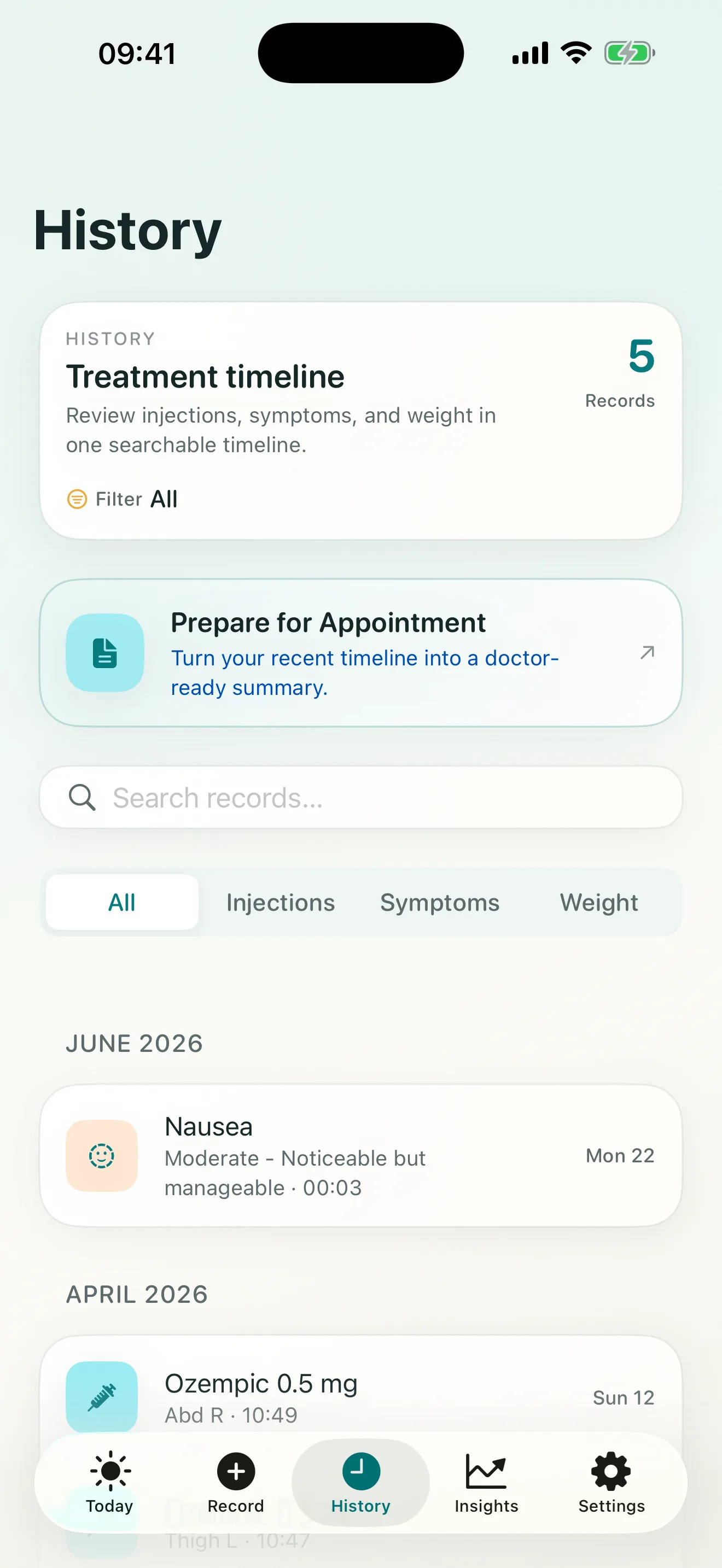
A useful GLP-1 injection log should answer a simple question: what happened, and when? It does not need to become a full daily journal.
The essential injection fields
For each injection, record:
- medication and dose,
- date and time,
- injection site,
- a short note when something was unusual.
These fields create the basic sequence. Recording them at the time of the injection is usually easier than reconstructing dates and sites before an appointment.
Add context only when it is useful
Symptoms and weight checkpoints can add context, but they do not need to be forced into every injection entry. When you do record a symptom, include its severity, timing, and a short factual note. When you record weight, keep the date visible so it is not mistaken for an injection-day measurement.
For a focused symptom workflow, see how to build a GLP-1 symptom timeline without turning observations into conclusions.
Avoid turning guesses into facts. If you do not remember an exact time or site, a note about the uncertainty is more honest than a precise-looking entry created later.
Keep the log reviewable
A strong log is not just complete; it is easy to scan. Before a follow-up, review the timeline for:
- missing or duplicate injections,
- dose changes that need context,
- symptoms you want to discuss,
- notes that are unclear without explanation.
Steadiva keeps those entries in History and uses the same record for appointment preparation. The app does not decide whether a symptom is medication-related or whether treatment should change. Those questions belong in the clinical conversation.
See the GLP-1 injection log page for the matching Steadiva workflow.
Source and scope
Always follow the instructions for your prescribed medicine. Current FDA prescribing information for Wegovy and Zepbound describes medicine-specific administration details. Steadiva records what you enter and does not replace those instructions or guidance from a licensed clinician.